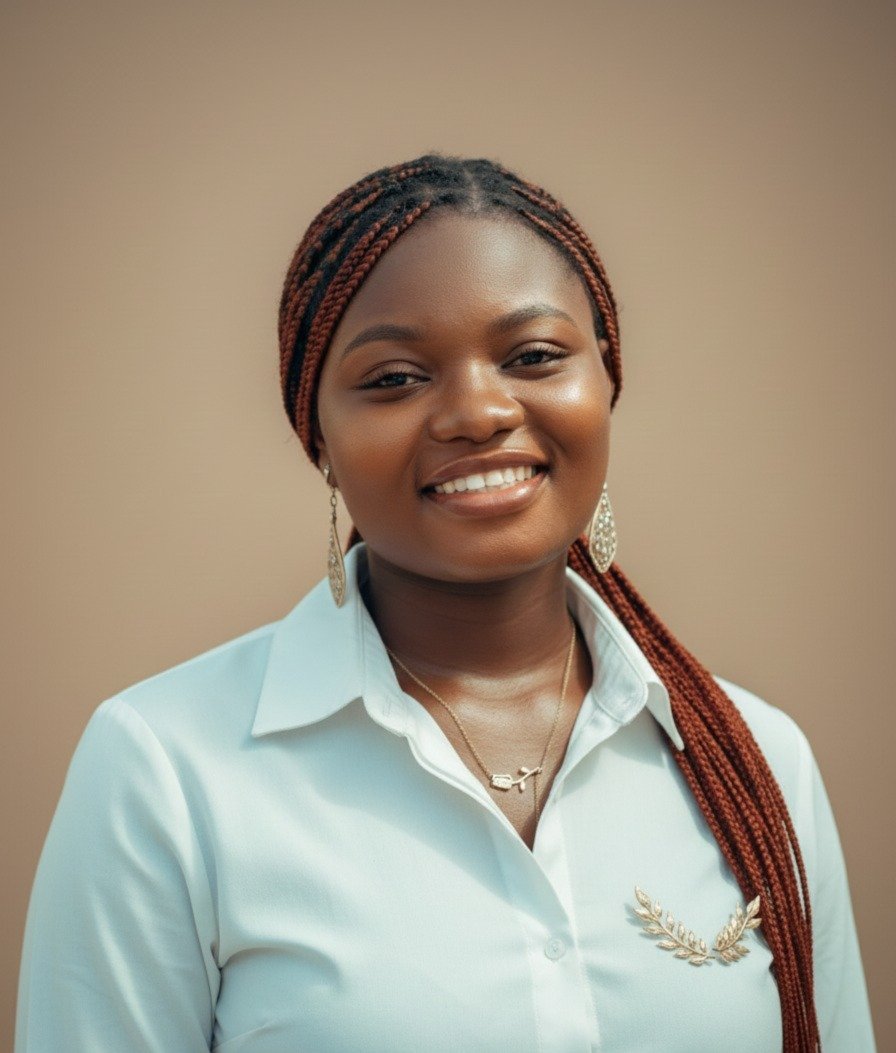
Africa's bioinformatics institute

Africa holds 60% of the
world's genetic diversity.
We're training the scientists
to decode it.

African researchers are largely absent from global science — not due to lack of talent, but lack of tools. We close that gap with world-class bioinformatics training.

1,200+
Researchers trained
24
African countries reached
60-day
Diploma programme
100%
Online, laptop-only
"African researchers don't need saving. They need skills. Bioinformatics is the equaliser — all you need is a laptop, an internet connection, and the right training to produce research that competes with any lab in the world."
AA
Dr. Ashraf Akintola
Mosquito geneticist · Founder, Noblekinbio

Your learning path

From your first command line to publishing in international journals — we take you the full distance.

Free entry

Intro to bioinformatics

What it is, why it matters, and what you can do with a laptop and the right skills. No experience needed.

Free
Foundation

DNA & RNA sequence analysis

Tools, pipelines, and workflows for genomics and transcriptomics research. Self-paced with lifetime access.

$14.99 self-paced
Institutional

University & lab training

Custom workshops for departments, research groups, NGOs, and health ministries across Africa.

Contact us

What changes when you learn this

"Before Noblekinbio I had years of wet lab data I couldn't analyse. Six weeks after the diploma, I submitted my first genomics paper."

FK
Fatima K.
PhD candidate, University of Lagos

"The training is built for African researchers — the examples, the context, the datasets. It doesn't feel imported from somewhere else."

MO
Mohammed O.
Research fellow, Kenyatta University

"Dr. Ashraf explains things so clearly. Complex pipelines that took me months to figure out on my own — understood in days."

AB
Amina B.
Lecturer, Ahmadu Bello University

Africa's scientific future
is being written now.
Help write it.

Join thousands of researchers building the skills to publish
world-class research from the continent.

About the founder

Dr. Ashraf Akintola

Mosquito geneticist. Bioinformatician. Climate researcher. And someone who believes Africa's scientific story must be written by Africans.

AA
Field
Medical entomology
Specialisation
Mosquito genetics & climate
Based in
Daegu, South Korea
Languages
English · Arabic · Yoruba
Founded
Noblekinbio

Where science meets purpose

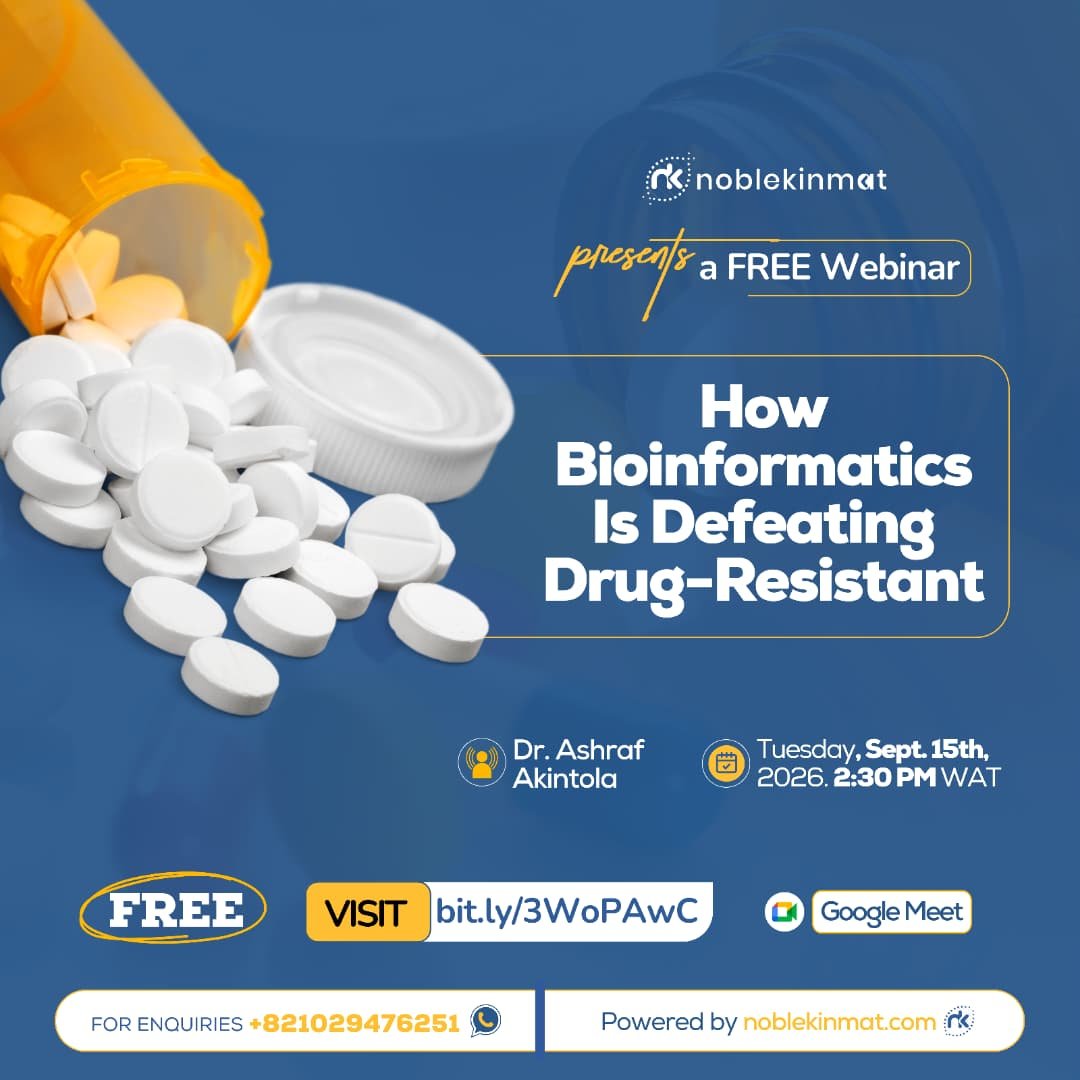
Dr. Ashraf Akintola is a medical entomologist whose research sits at one of the most urgent intersections in modern science: how climate change is reshaping the genetic diversity of mosquitoes — and what that means for disease, human health, and the future of African communities.

His research isn't abstract. Mosquitoes are the world's deadliest animal. In Africa, where vector-borne disease still claims hundreds of thousands of lives annually, understanding how these insects are evolving under climate pressure is not a luxury — it is a survival question.

But Dr. Ashraf noticed something troubling: African researchers were largely absent from the global conversations about African genetics, African disease, and African futures. Not because of lack of talent. Because of a skills gap that no one was systematically closing.

That gap is why he founded Noblekinbio — to build the bioinformatics capacity that allows African scientists to stop being subjects of research, and start being its authors.
Research focus areas

Genetic diversity of mosquito vectors across Africa

Climate change and vector evolution

Bioinformatics pipeline development for low-resource settings

Population genomics and disease epidemiology

Capacity building in computational biology across Africa


How he got here

Roots

Nigeria

Grew up navigating the intersection of Islamic scholarship, community, and a deep curiosity about the natural world.

Research

Medical entomology & genetics

Specialised in the genetic diversity of mosquitoes and how climate change is influencing their evolution — research with direct implications for disease control across Africa.

Korea

International research career

Currently based in Daegu, South Korea, conducting research while building training programmes that reach across the African continent.

Founded

Noblekinbio

Launched to close the bioinformatics skills gap in Africa — giving researchers the computational tools to publish globally competitive research from any laptop, anywhere on the continent.

A life lived across worlds

Scientist

Published researcher in medical entomology, mosquito genetics, and the effects of climate change on vector evolution.

Educator

Trained over a thousand African researchers in bioinformatics — from students to faculty to health professionals.

Muslim scholar

Arabic poet and Islamic teacher who bridges faith, modern science, and community — on social media and in life.

Entrepreneur

Founder and builder — with ventures spanning bioinformatics, education, and community across Nigeria, Korea, and beyond.

"Africa has 60% of the world's greatest genetic diversity. We will not wait for the world to study it for us. We will build the scientists who study it themselves."
AA
Dr. Ashraf Akintola
Founder, Noblekinbio

Ready to train
with Dr. Ashraf?

Join the next cohort of the 60-day bioinformatics diploma.

Learn bioinformatics.
Publish world-class research.

Every course is built for African researchers — practical, accessible, and designed to get you publishing.

🧬
Beginner 3 hours · Self-paced

Introduction to bioinformatics

What bioinformatics is, why it matters for Africa, and how to get started with just a laptop and internet connection. No prior coding experience needed.

What is bioinformatics Tools overview African context
🦟
Beginner 8 hours · Self-paced

Foundations of genomics

Understand gene structure, function, and evolution. Analyse entire genomes and drive insights in medicine, agriculture, and biodiversity.

Genome assembly Annotation Variant calling
🔬
Intermediate 10 hours · Self-paced

RNA transcriptomics & gene expression

Study RNA transcripts to understand gene expression and regulation — aiding research in disease, development, and therapeutic targets.

RNA-seq pipelines Differential expression Visualisation
⚗️
Intermediate 8 hours · Self-paced

Proteomics & protein analysis

Analyse proteins to identify structure, function, and interactions — advancing drug discovery and biomarker identification from your desktop.

Protein structure Mass spectrometry Biomarkers
🏥
Advanced 12 hours · Self-paced

Health informatics & clinical data

Designed for researchers, health professionals, and data scientists looking to analyse complex health informatics data in clinical and public health settings.

Clinical data Epidemiology Statistical methods
🌍
Intermediate 9 hours · Self-paced

Population genetics & disease

Explore genetic variation and understand susceptibility to complex diseases — particularly relevant for African genetic diversity research.

Population structure GWAS African genomes
💊
Advanced 10 hours · Self-paced

Drug discovery & molecular biology

Use computational tools to analyse chemical compounds, supporting drug design, discovery, and molecular interaction studies.

Molecular docking Drug design Cheminformatics
🏛️
Institutional Custom · On-site or online

University & institutional training

Custom workshops and training programmes for universities, research groups, NGOs, and health ministries. Tailored to your team's level and goals.

Custom curriculum Group training Certification

The 60-day diploma — in detail

A structured, cohort-based programme that takes you from foundational skills to publishing-ready competence in 60 days. Taught live by Dr. Ashraf with a community of peers from across Africa.

1
Weeks 1–2: Genomics foundations
Genome assembly, annotation, variant calling
2
Weeks 3–4: Transcriptomics
RNA-seq, differential expression, pathway analysis
3
Weeks 5–6: Proteomics
Protein identification, interaction networks
4
Weeks 7–8: Research project
Apply everything to your own dataset

Enrol in the diploma

Duration60 days
FormatLive online cohort
Next cohortJune 2026
CertificateYes, on completion
PrerequisitesNone required
$100 per learner
Payment plans available on request

Not sure where to start?

Begin with our free intro course — no commitment, no experience needed.

Let's talk.

Whether you're a researcher ready to enrol, a university exploring institutional training, or a journalist looking for an expert voice on African genomics — reach out.

We respond within 48 hours

Dr. Ashraf personally reviews all enquiries about the diploma programme and institutional training. For course support, our team responds within 2 business days.

Email
hello@noblekinbio.com
Best for detailed enquiries
WhatsApp
Available on request
For enrolled students & partners
Response time
Within 48 hours
Mon–Fri, Korea Standard Time

Send a message

Fill in the form and we'll get back to you within 48 hours.

Message sent. We'll be in touch within 48 hours.

Frequently asked questions

Do I need coding experience to start?
+
No. The intro course and diploma programme both start from zero. You need a laptop, a reliable internet connection, and curiosity. We teach you everything else.
What software or equipment do I need?
+
Just a laptop and internet connection. All tools used in our courses are free and open-source. We will guide you through installation in the first module.
Is the diploma recognised internationally?
+
The diploma is awarded by Noblekinbio and recognised within our growing network of African universities and research institutions. We are actively working to formalise partnerships with accrediting bodies.
Can my university or department enrol a group?
+
Yes. We offer custom institutional training for departments, labs, NGOs, and health ministries. Contact us with the size of your group and your goals and we will put together a tailored proposal.
Are payment plans available?
+
Yes. We understand that researchers in Africa often face financial constraints. Payment plans and partial scholarships are available for the diploma programme. Reach out via the contact form and we will work something out.
When is the next diploma cohort?
+
The next cohort begins June 2026. Places are limited. Submit your enquiry early to secure your spot.